
On this page:
Gippsland Lakes algal bloom
29 September 2026
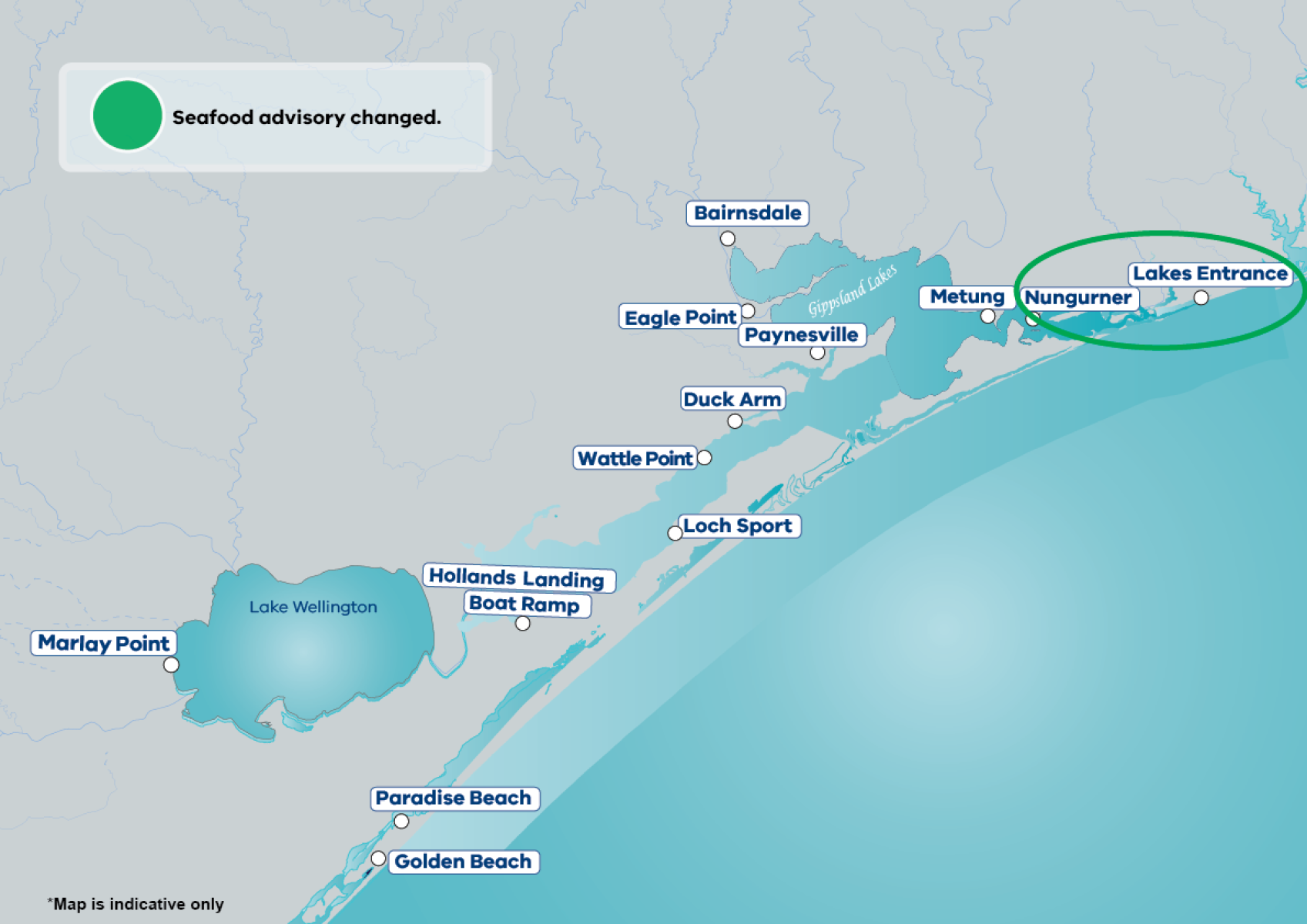
Due to a decline in harmful algal species in the Gippsland Lakes between Nungurner and Lakes Entrance, the seafood advisory has changed.
Mussels and crabs have been tested and cleared as safe to eat. Prawns have not yet been tested as they are still juveniles within the nursery areas of the Gippsland Lakes.
Once prawns mature and are available for harvest, they will be tested. For your own safety continue to gut and gill fish.
Seafood sold by licensed commercial operators in Lakes Entrance is safe to eat, as it is subject to regular testing and food safety requirements overseen by Safe Food Victoria.
The recreational seafood advisory remains unchanged for areas west of Nungurner, including Lake King, Lake Victoria and Lake Wellington.
This is because as harmful algae levels decline, they may release toxins that can build up in seafood which can cause illness if consumed.
For these areas, the following advice remains in place.
- For your own safety, do not collect or eat shellfish, prawns or crabs from the Gippsland Lakes west of Nungurner.
- Gut and gill any fish caught from these lakes before cooking and eating.
- Do not cook or eat whole fish.
What is algae?
Algae are a natural component of most aquatic systems, including streams, lakes, estuaries and the sea. Victorian waterways contain a range of algal species, including some that can be harmful, at varying levels as part of the natural balance.
Individual cells are very small and are normally not visible in a water body, but numbers can increase rapidly and blooms, or scums, can become visible across the water surface. However, harmful algae are not always visible or detectable by smell.
While blue‑green algae are often recognisable by discoloured water or odour, this is not always the case. Even when water appears clear, some harmful species may be present and cannot be seen without testing.
Blooms can be triggered by nutrient levels, low inflows, lower storage volumes and warmer weather conditions. Blooms of blue-green algae can be unsightly, ranging in colour from dark green to yellowish-brown. They develop a paint-like consistency as they dry out and often have a pungent smell.
Health risks
Large numbers of algae in water bodies can produce toxins that can affect the health of humans, animals, birds and livestock as well as harm the environment.
In Victoria, water corporations and local waterway managers sample and test regularly for algal species.
An algal bloom is managed based on the use of the water body and the density and nature of the bloom.
Continued algae monitoring in the Gippsland Lakes
Monitoring and analysis of samples is being conducted on a regular basis to determine the type, amount and extent of algae present.
If a species of concern is detected, the public will be notified and signs put in place to provide advice where needed.
The Gippsland Lakes contain many different types of algae at varying levels as part of the natural environment and balance of the Lakes system.
Weather conditions, nutrient levels, salinity and water flows all affect the levels of algae and can contribute to the formation of algal blooms on the lakes.
Warmer weather conditions are likely to lead to a natural increase in the abundance and variety of algae and other organisms in the lakes.
We conduct weekly monitoring and reporting in the summer months unless there are significant changes to algae levels, and monthly testing is conducted outside this period.
More information
Further information can be found on the following websites:
Page last updated: 22/07/26